
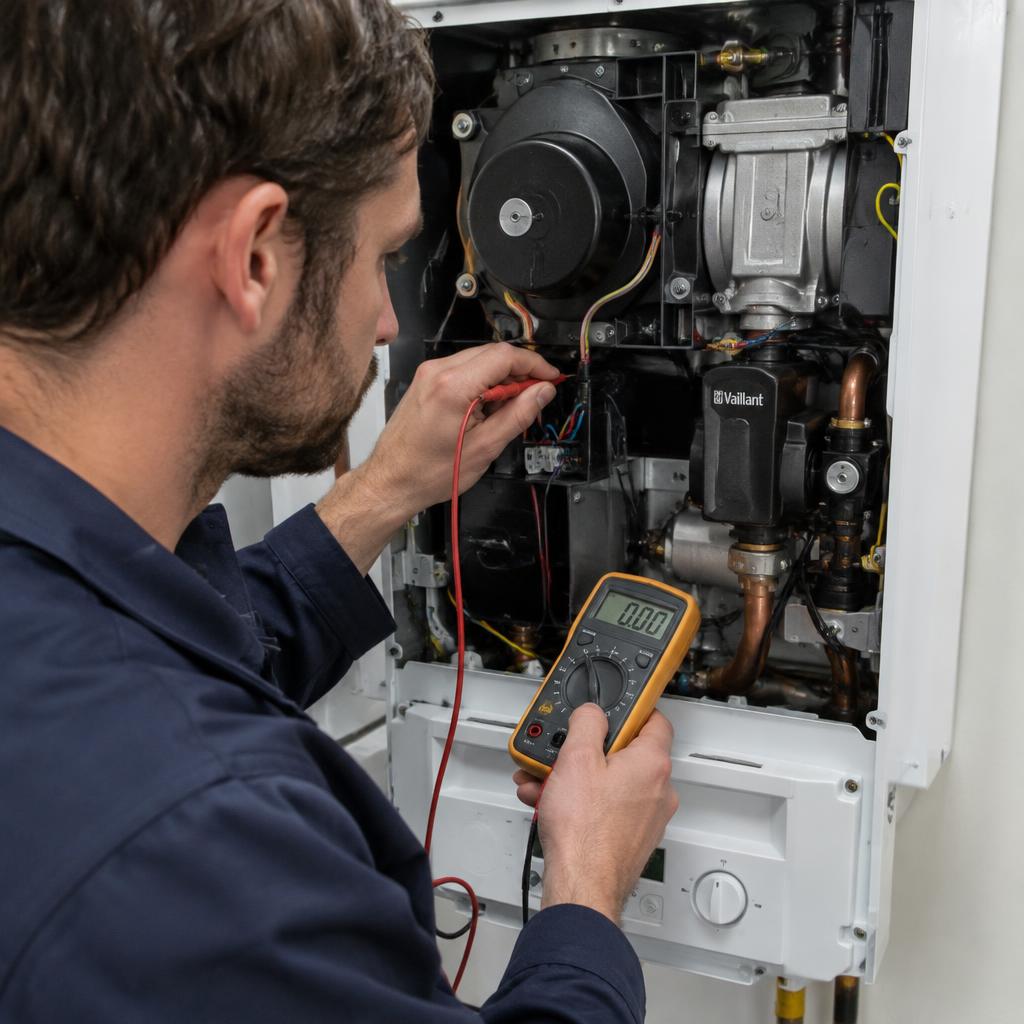
Gas Smell or Carbon Monoxide Alarm Means Stop and Call Immediately
If you smell gas or your carbon monoxide alarm goes off, this isn't a repair booking yet. Get everyone out into fresh air and call the National Gas Emergency Service on 0800 111 999 first. Once the emergency engineer has made things safe, you can arrange the boiler repair.
We'll be straight with you here. Most boiler faults can wait for a proper visit. A gas smell or a carbon monoxide alarm can't. Don't call us first, and don't call any heating company first. Call the emergency line. It's free, it runs day and night, and its job is to make your home safe.
If you smell gas, do these things:
- Don't smoke, strike a match or use anything with a naked flame.
- Don't switch anything on or off, and don't ring doorbells.
- Open doors and windows on your way out if it's safe to do so.
- Turn off the gas at the meter if you can reach it easily. The handle is off when it sits across the pipe.
- Leave the property and call 0800 111 999 from outside.
If your carbon monoxide alarm sounds, treat it as real, even if you can't smell anything. Carbon monoxide has no smell, no colour and no taste. That's exactly why the alarm is there. Get everyone outside, pets included, and leave the door open behind you. Then call the emergency line.
Sometimes there's no alarm, only a feeling that something's off. Carbon monoxide poisoning can feel like flu. Watch for:
- Headaches, dizziness or feeling sick
- Tiredness or confusion that doesn't make sense
- Several people in the home, or pets, feeling unwell at the same time
- Feeling better when you're out of the house and worse when you come back
If anyone has these symptoms, get them into fresh air and get medical help. Call NHS 111, or 999 if someone is seriously unwell.
There are also warning signs on the boiler itself worth taking seriously. A flame that burns yellow or orange instead of crisp blue, black or brown staining on or around the boiler, a pilot light that keeps going out, and heavy condensation on nearby windows can all point to poor burning or a flue problem. None of these on its own proves there's a leak. They're a reason to stop using the boiler and get it checked, not something to live with until the next service.
If you live in a flat or a converted house, which covers a lot of London homes, tell your neighbours and your building manager or landlord as well. Gas pipes and flues can run between flats, so a problem in one home may affect the people next door. Landlords and property managers should keep a record of any alarm or callout and arrange the follow-up repair quickly.
The emergency engineer's job is to make the supply safe. That often means capping off an appliance or leaving the gas off. They don't usually repair your boiler. Once your home has been made safe and you've been told the boiler needs work, that's when a boiler repair visit makes sense, and you can ring our team on 020 8798 2588 to arrange it.
Common Boiler Faults That Call for a Repair Visit
Most boiler problems show up as something you notice, not something you can see inside the casing. A cold radiator, a noise, a number on the display. Each can have more than one cause, and that's why finding the real one matters more than swapping a part and hoping. Here are the faults that call for a repair visit, and what each might be telling you.
No heating, no hot water, or only one of the two. If everything's gone cold, the boiler may have locked itself out to protect itself. If you've got hot water but the radiators stay cold, or the other way round, the part that sends hot water to the taps or to the heating may be sticking. Both need an engineer to find out why, not just to get things running again for a day.
Pressure that keeps dropping. Most combi and system boilers have a pressure gauge on the front. If you keep finding it low, water is escaping somewhere. That could be a slow leak under the floor, a weeping radiator valve or a fault inside the boiler. Topping it up over and over doesn't fix anything. It only hides the problem.
Leaks and drips. Water under the boiler, damp patches on the ceiling below, or rust marks on pipes all need checking. In London flats and conversions, a leak can soak through to the home downstairs before you've noticed it, so it's worth acting quickly.
Banging, gurgling or kettling. A rumbling sound like a kettle coming to the boil often points to limescale or sludge building up inside the heat exchanger. Gurgling can mean trapped air or poor circulation. Banging pipes can come from pressure or flow problems in the system.
Error codes and lockouts. Modern boilers show a code when something goes wrong. The code tells an engineer where to start looking, but it rarely gives the whole answer. If the same code keeps coming back, the boiler needs proper fault-finding.
A frozen condensate pipe. Condensing boilers drain waste water through a small plastic pipe. On a lot of London terraces and flats, that pipe runs down an outside wall, where it can freeze in a cold snap and stop the boiler. If it keeps happening, the pipe may need rerouting or insulating.
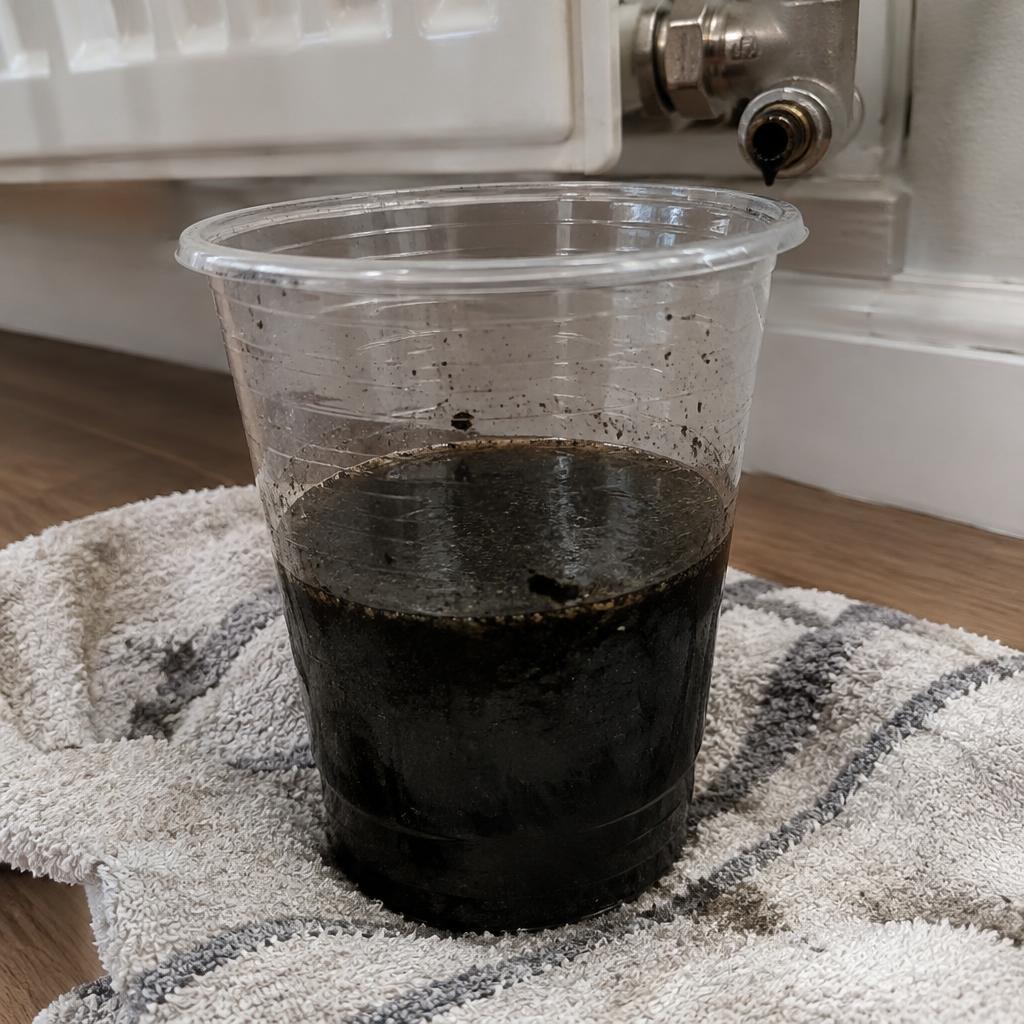
Radiators that are cold at the bottom or heat unevenly. This one often isn't a boiler fault at all. Sludge and magnetite, a black iron-oxide gunk that forms inside older systems, settle in radiators and block the flow. It can also strain the pump and the boiler over time. A repair visit can confirm whether that's what's happening, and if it is, our domestic power flushing service or commercial power flushing service is usually the better answer than replacing boiler parts.
- Cold radiators or no hot water: possible lockout, a sticking valve or a pump problem
- Pressure loss: a leak somewhere in the system or inside the boiler
- Kettling or gurgling: scale, sludge or trapped air
- Cold spots on radiators: sludge and magnetite restricting flow
If you've noticed a yellow flame, sooty marks or any of the warning signs covered above, stop using the boiler and follow that advice first. For everything else on this list, a boiler repair visit is the right next step. It's how you find out whether you're dealing with one worn part or a system that needs more attention.
When a Boiler Fault Does Not Need a Repair Call-Out
Not every cold morning means you need an engineer. Some faults have a simple cause you can check in a few minutes, and it's worth doing that before you book anyone, including us. Paying for a repair visit only to find the timer was set wrong isn't a good use of your money.
These are the checks worth making first. Your boiler manual will show you where each control is on your model. Most manufacturers also put a copy on their website if you've lost yours.
- The timer and thermostat. Check that the heating is set to come on, that the clock is right, and that the room thermostat is turned up above the current room temperature. After a clock change or a house move, this explains a lot of no-heat calls.
- Your gas supply. If other gas appliances like the hob aren't working either, the problem is with the supply, not the boiler. If you're on a prepayment meter, check you've still got credit.
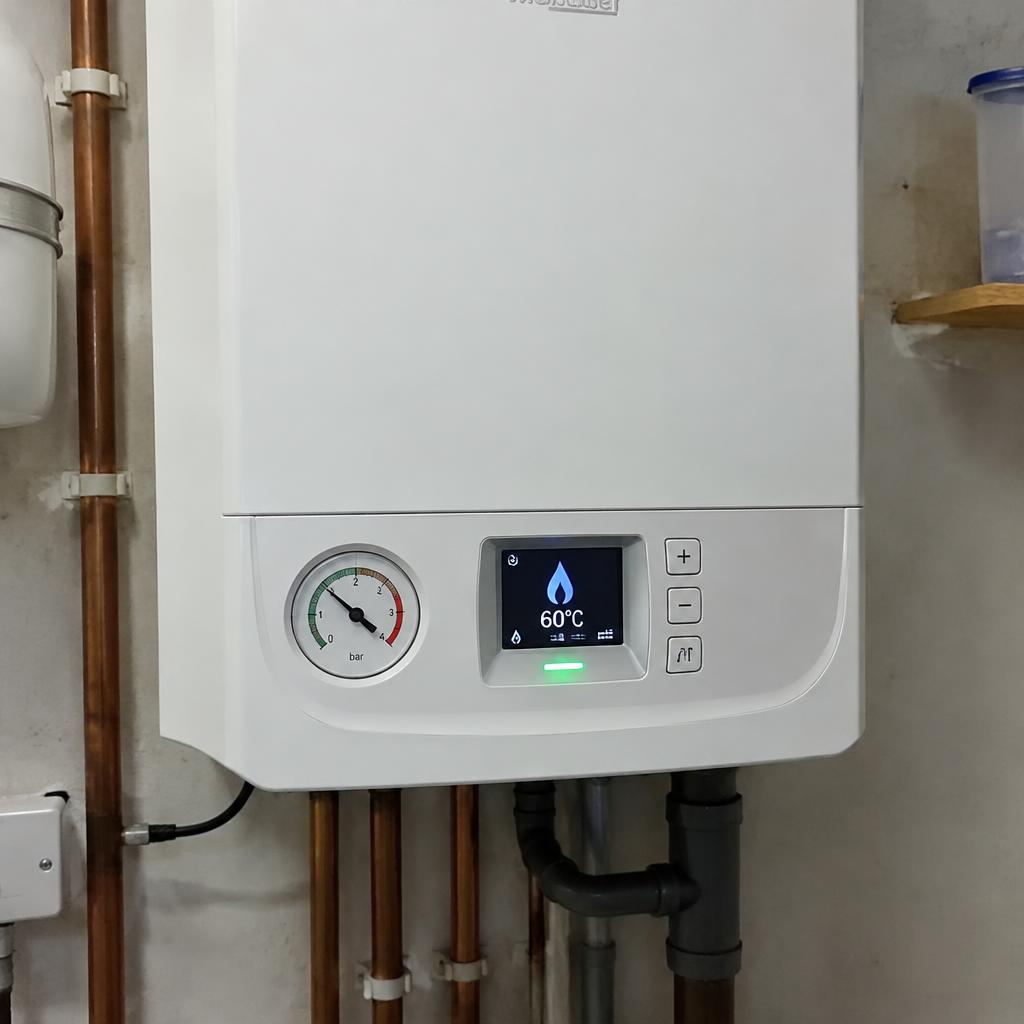
- Low pressure, once. If the gauge reads low, most combi and system boilers can be topped up using the filling loop, as your manual explains. If that brings it back and it stays steady for weeks, you've likely solved it. If it drops again, that's the slow leak we described above, and it needs a repair visit.
- A single lockout. Many boilers let you restart them after a lockout. If the boiler restarts and runs normally, keep an eye on it. If it locks out again, don't keep restarting it. Repeated lockouts are the boiler telling you something's wrong.
- A frozen condensate pipe in a cold snap. If the boiler has stopped during freezing weather and the pipe outside is frozen, you can often thaw it with warm water, never boiling, poured along the pipe. Your manual will say whether your model needs a restart afterwards.
- Radiators cold at the top. That's usually trapped air, and bleeding the radiator with a radiator key often fixes it. If you have to top up the pressure after bleeding, that's normal. Cold at the bottom is a different problem, which we covered above.
Some issues are real but can wait for a planned visit. If the boiler works but takes a bit longer to warm up than it used to, or makes a faint noise that hasn't got any worse, you don't need an emergency appointment. Make a note of what you've noticed and raise it at the next boiler service. A steady, minor change is useful for an engineer to know about, but it rarely needs a separate call-out.
Tenants should usually report problems to their landlord or managing agent rather than booking a repair themselves, even for the checks above. Landlords are normally responsible for arranging gas work, and booking it yourself can cause confusion about who pays.
There are also things you shouldn't try at all. Never take the casing off the boiler, and don't attempt any repair on gas parts yourself. In the UK, work on gas appliances must be carried out by an engineer who's qualified to do it. The checks above are all outside the boiler or on its front controls. Anything beyond that is a job for an engineer.
If you've worked through these checks and the problem's still there, or it keeps coming back, that's your answer. It isn't a settings issue or a one-off, and finding the real cause is what a repair visit is for.
Repair or Replace: What Affects the Decision
A boiler fault doesn't automatically mean you need a new boiler. Plenty of boilers carry on happily for years after a sensible repair. Sometimes, though, spending money on an old boiler only buys you a short break before the next breakdown. The right answer depends on what's wrong, and that comes back to finding the real cause first.
These are the things that genuinely shift the decision one way or the other:
- What has failed. A worn pump, valve or fan is a normal repair. A cracked or badly blocked heat exchanger is a much bigger job, and on an older boiler it often tips the balance towards replacing.
- How often it's failing. One fault in several years is ordinary wear. The same boiler breaking down again and again, with a different part each time, suggests it's wearing out as a whole.
- Its age and whether parts are still made. Boilers don't last forever, and many start to struggle somewhere past the 10 to 15 year mark. For some older models, parts become hard to find or slow to arrive, which can leave you without heating while you wait.
- The cost of the repair compared with the boiler's remaining life. If a repair costs a large share of what a new boiler would and the boiler is already old, it's worth asking whether the money is better spent elsewhere.
- Whether your needs have changed. A boiler that suited one person in a flat may not keep up with a family, a loft conversion or an extra bathroom.
There's one factor people often miss. If sludge and magnetite have been building up in your pipes and radiators, they'll still be there after a new boiler goes in. A brand new boiler connected to a dirty system can soon run into the same poor circulation, cold spots and strain that caused trouble with the old one. That's why cleaning the system matters whichever way you go. Our domestic power flushing service is often the sensible step alongside a repair or before a new boiler is fitted.
London homes add their own practical questions. In flats and converted houses, space is tight and the flue position is often limited by the building. Changing the type of boiler, for example swapping a system boiler and hot water cylinder for a combi, can be a bigger job than a straight swap. Landlords also need to think about tenants. A repair that gets the heating back today may suit the property better than a full replacement that means more time without heating while the work is planned.
Be wary of anyone who tells you that you need a new boiler before they've properly found the fault. A fair assessment should tell you what's wrong, what fixing it involves, and whether the boiler is likely to keep giving trouble. Then the choice is yours. If replacing does turn out to be the better option, our boiler installation service covers that, and we can explain what's involved.
For businesses, schools, blocks of flats and other commercial sites, the decision usually involves more than one boiler and the wider heating system. Commercial surveys are free, so you can get a clear picture of the system's condition before you decide anything.
What Happens During a Boiler Repair Visit
A good repair visit has one main job. It finds out why the boiler has failed before anything gets replaced. Knowing how that usually works helps you get more out of the visit and spot when something's being rushed.
A little preparation saves time once the engineer arrives. Before the visit, it helps to have:
- The boiler's make and model. It's usually on a label on the front or underneath.
- Any error code on the display, written down or photographed.
- A short note of what happened and when. For example, the pressure has dropped three times this month, or there's been no hot water since Tuesday.
- Clear access to the boiler, the gas meter and any radiators that are playing up. In London flats, boilers are often tucked inside kitchen units, airing cupboards or lofts, so clearing the way helps.
- Parking and entry details. Many London streets have permit parking, and blocks of flats often have entry codes or a concierge, so let the engineer know in advance.
On the day, a sensible repair visit usually follows a clear order. First, the engineer asks what you've noticed. Next, they check the basics, such as pressure, controls and the error history. After that, they run the boiler and test the parts linked to the symptom, like the pump, the valves, the fan or the condensate pipe. Your description matters at this stage. It points the engineer to the right place and saves guesswork.
Sometimes the problem is fixed on the same visit. Sometimes a part has to be ordered, especially for older or less common boilers, and the repair is finished on a second visit. If the engineer finds signs of sludge or magnetite, such as dirty water when a radiator is bled or a strained pump, they should tell you. In that case, a new part alone might not stop the fault from coming back.
Before the engineer leaves, you should know three things. What was wrong, what was done about it, and whether anything else needs watching. The boiler should also be tested afterwards, so you can see the heating and hot water working.
Across the trade, repair costs are usually made up of labour, parts and any return visit. The things that push the cost up or down tend to be the part that has failed, how easy it is to get, how long the fault takes to trace, and how easy the boiler is to reach. Before you book anyone, it's fair to ask a few questions. How is the visit charged? Are parts included? And will you get a price for the repair before the work goes ahead?
With us, the standard booking deposit is £60. For boiler and heating repairs, the deposit covers the cost of materials. Commercial heating systems need a 50% deposit, and commercial surveys are free, as mentioned above.
If your checks haven't solved it and the fault keeps coming back, book a boiler repair visit through our website, or call our team on 020 8798 2588. We cover all of London and Greater London.