
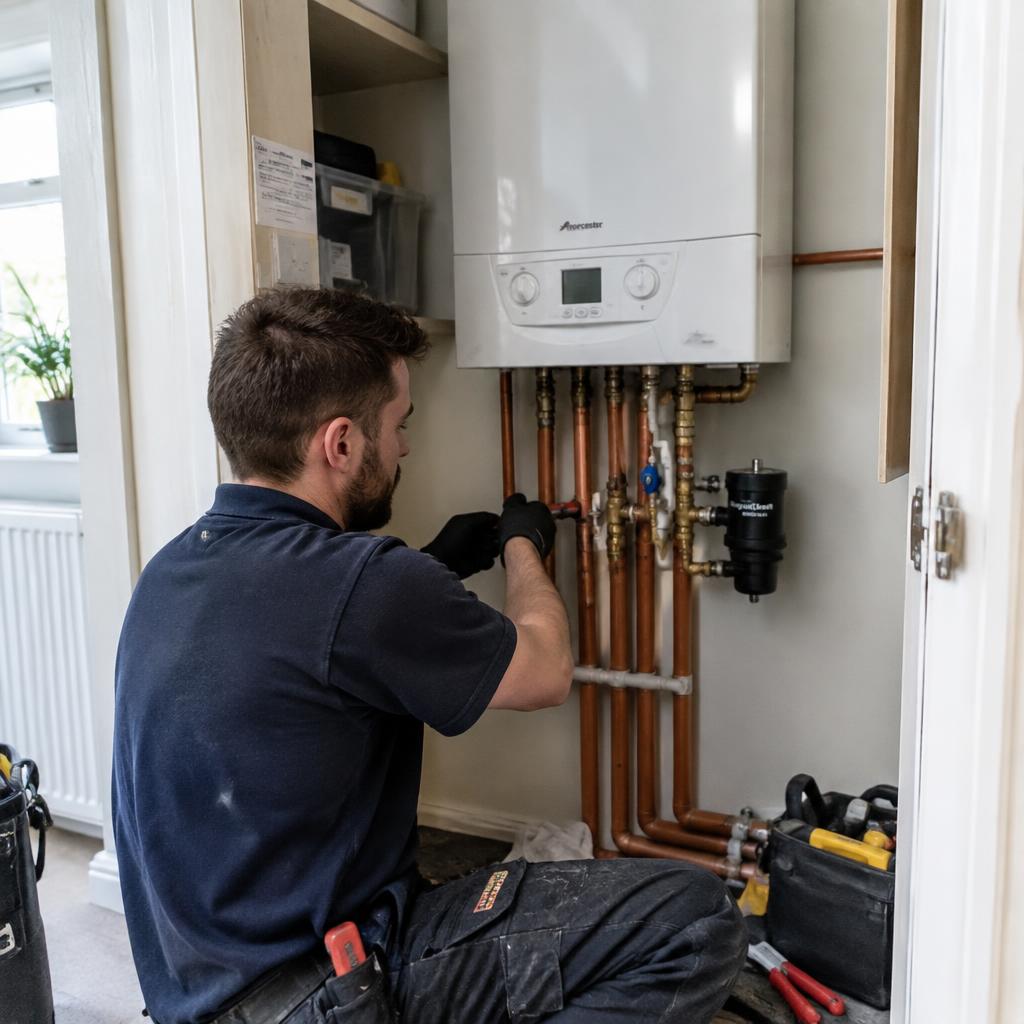
Deciding Between Repair, Replacement, and a Power Flush
The right choice depends on where the problem is: the boiler itself, or the water and pipework around it. A sound boiler with one worn part usually needs a repair. Cold patches and sludge point to a flush. A boiler that keeps failing may need replacing, and a new boiler fitted to a dirty system starts life at a disadvantage.
When your heating isn't working properly, it's easy to assume the boiler is finished. Sometimes it is. Often, though, the boiler is doing its job and the trouble sits in the radiators and pipes. Before you spend money, it's worth knowing which one you're dealing with.
Here are the signs that usually point each way.
- A repair may be enough if the boiler is otherwise reliable and one part has worn out, such as a pump or a diverter valve, or the pressure keeps dropping because of a leak that can be found and fixed.
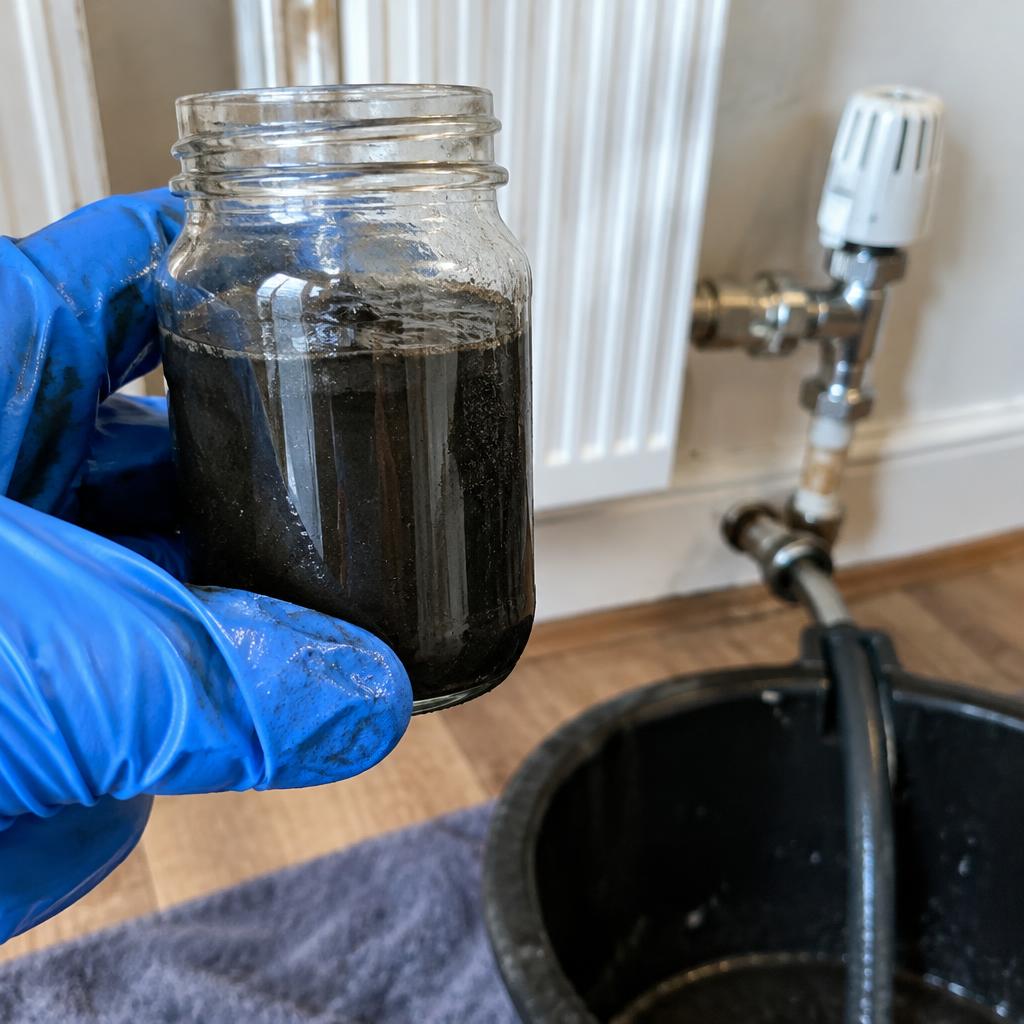
- A power flush may be the answer if your radiators are cold at the bottom, some rooms never warm up, the water is black when you bleed a radiator, or the heating is slow and makes banging or gurgling noises while the boiler itself fires up fine.
- Replacement starts to make sense if the boiler keeps breaking down, parts are getting hard to find, it's an older non-condensing model, or your home has changed and the boiler no longer suits it, for example after adding a bathroom.
These options often overlap. Black sludge, mostly magnetite from rusting radiators and pipes, doesn't go away when you change the boiler. It travels straight into the new one and can clog its heat exchanger, the narrow passages that heat your water. The condition of your system matters as much as the boiler you choose. A new boiler only performs as well as the water running through it, which is why many installers clean the system before fitting.
Picture a landlord whose tenant reports a cold bedroom radiator and a boiler that's started to rumble. The quick answer is a new boiler. But if the radiator is warm at the top and cold at the bottom, that points to sludge. A flush might settle both problems, or it might show the boiler really is near the end. Either way, you're deciding with the facts in front of you.
Be honest with yourself about the simple stuff, too. If only one radiator is cold at the top, try bleeding it first. If the pressure gauge has dropped, topping it up may sort it. Neither needs a new boiler or a flush. If the problem comes back, that's when a professional look is worth it.
If you can't tell which situation you're in, that's normal. It's exactly what an assessment is for. A standard booking carries a £60 deposit, and boiler and heating repairs take the cost of materials. For offices, shops, blocks of flats and other commercial buildings, the survey is free, and commercial systems require a 50% deposit once you go ahead with the work.
Signs Your Current Boiler Needs Replacing, Not Repairing
A boiler rarely fails all at once. It usually tells you over months, with small faults that get closer together. The trick is reading those signs properly, because some come from the boiler and some come from dirty water in the system. Here's what tends to point to the boiler itself.
- The callouts are adding up. One repair in a few years is normal. A new part every winter is different. When the last two or three bills start looking like a decent share of a new boiler, it's worth asking whether the next repair is money well spent.
- It locks out again and again. Most boilers shut themselves down when something's wrong. If you're resetting it every week and the fault keeps coming back after repairs, the boiler is struggling to run safely as it is.
- Water is leaking from inside the casing. A drip from a pipe joint underneath is often a simple fix. Rust or water inside the boiler itself can mean the heat exchanger or other main parts are corroding, and that's usually a costly part to replace.
- Hot water can't keep up. If your combi copes with one tap but goes lukewarm when someone runs the shower at the same time, it may simply be too small for how you live now. That's not a fault an engineer can repair.
- You've been told parts are hard to get. When an engineer has to hunt for a part, or warns you the next one may not be available, you can end up without heating while you wait.
Now for the signs that are easy to misread. Banging, rumbling or a kettle-like noise from the boiler, slow heating and cold radiators can all look like a dying boiler. Very often they come from sludge and limescale in the system, which make the boiler overheat and work harder than it should. Replace the boiler without dealing with that, and the new one inherits the same problem.
So one of the most useful questions you can ask is simple: has the system been cleaned? If the noise and poor heating carry on after the system has been flushed and the water runs clear, the boiler is much more likely to be the real issue. If the system has never been cleaned, you don't yet know which part is at fault.
A boiler is best judged on clean water. Sludge can make a healthy boiler sound like it's failing, and it can shorten the life of a brand new one.
Your home matters too. A boiler fitted for a one-bathroom flat may not suit the same property once it's been extended or converted, or once a landlord has added an en suite. In that case, replacing it isn't about fixing a fault. It's about fitting a boiler that matches how the building is used today.
If two or three of these signs sound familiar, it's time for a proper look at both the boiler and the system. Then you can decide on replacement with confidence, not guesswork.
Why System Condition Affects a New Boiler's Performance
A new boiler doesn't heat your home on its own. It heats water, and that water then has to travel through every pipe and radiator in the building and come back again. If the system is clogged, slow or full of debris, the boiler pays for it, however new or well made it is.
You already know sludge can follow the old water straight into a new heat exchanger. That isn't the only problem. A dirty system holds back a new boiler in several other ways.
- Poor flow. Sludge sitting in the bottom of radiators and narrow pipes slows the water down. The boiler heats it fast, but it can't move the heat around the house, so some rooms stay cold.
- Overheating and noise. When water can't move freely, it gets too hot inside the boiler. That's where the banging and kettle-like sounds come from, and a new boiler can start making them too.
- Working harder. A boiler pushing against a blocked system runs for longer to reach the same temperature. That means more wear on its parts and more gas used for less warmth.
- Limescale. Much of London has hard water, and over the years it leaves scale inside pipes and heat exchangers. Scale and sludge together narrow the passages even further.
London's housing makes this worth checking. Many homes are Victorian or Edwardian terraces, or houses split into flats, where the heating has been added to and changed over the decades. You can end up with old radiators sitting next to new ones, long pipe runs and parts of the system nobody has looked at in years. Those are the places where sludge tends to settle.
You can get a rough idea of your system's condition yourself:
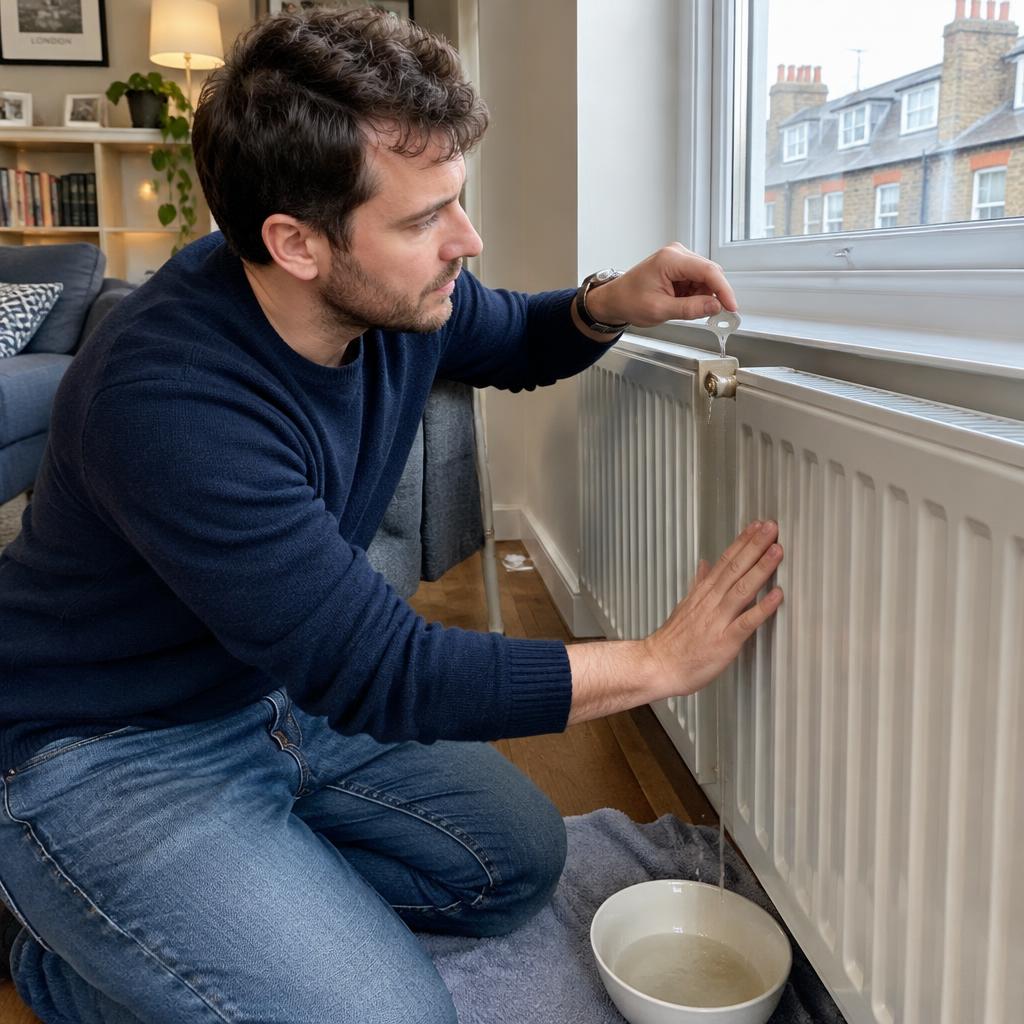
- Bleed a radiator and look at the water. Clear is good. Brown or black means corrosion and sludge.
- Feel your radiators once the heating's been on for a while. Warm at the top but cold at the bottom usually points to sludge.
- Notice how long the house takes to warm up, and whether the same rooms always lag behind.
None of this replaces a proper check, but it tells you whether cleaning is likely to be part of the job.
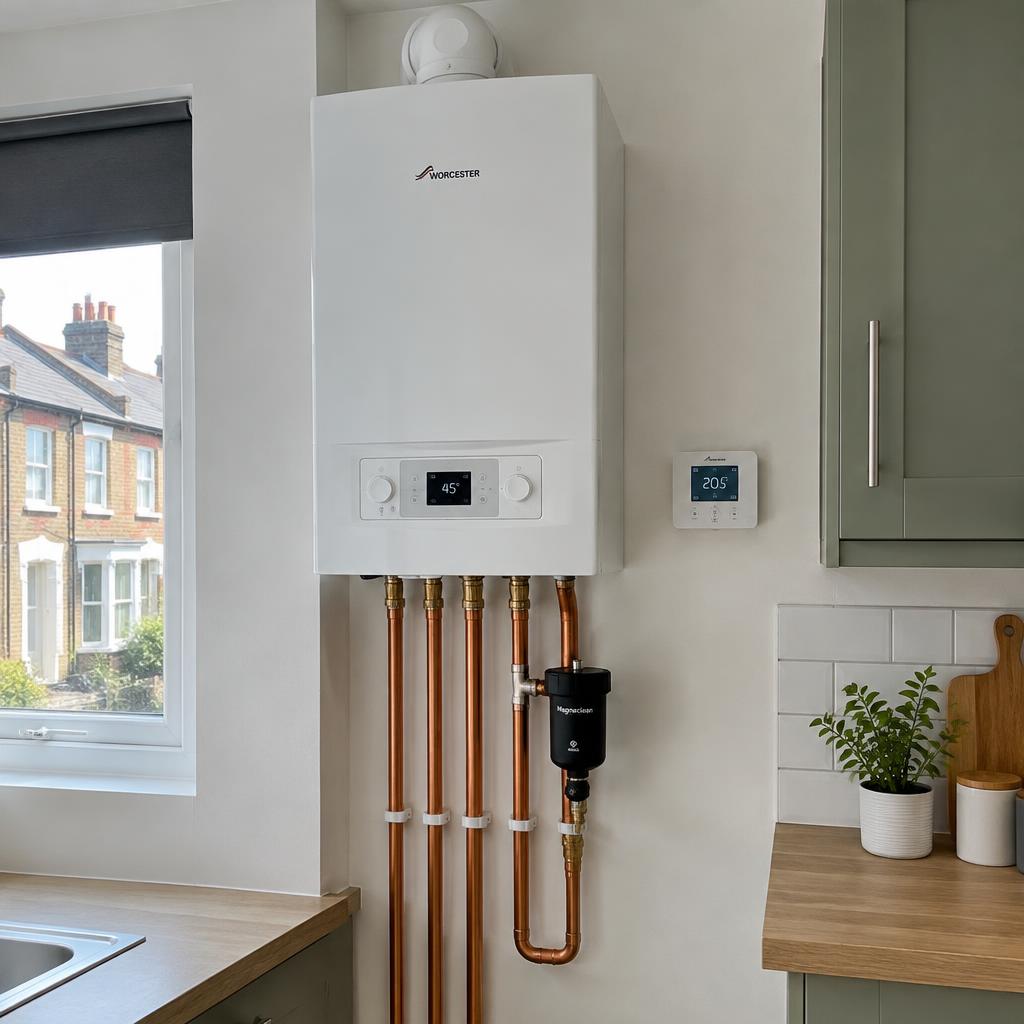
How a system is prepared depends on how dirty it is. A lightly dirty system may only need a chemical clean and a fresh fill. A heavily sludged one usually calls for a power flush, which pushes cleaning chemicals through the system at high flow to shift the build-up. After that, a magnetic filter is often fitted to catch new debris, and inhibitor is added to the water to slow corrosion from then on. Most boiler makers expect the system to be cleaned and treated before their boiler goes in, so this is a normal part of a good installation, not an add-on.
We carry out domestic power flushing for houses and flats, and commercial power flushing for larger buildings, so the state of your system can be looked at alongside the boiler itself. That way, your new boiler starts on clean water and has the best chance of doing the job you paid for.
Who Is Legally Allowed to Install a Gas Boiler
In the UK, only an engineer on the Gas Safe Register can legally install a gas boiler, whether it's a flat in a converted terrace or a plant room in an office block. It isn't a matter of experience or being handy. If someone works on gas appliances for payment and isn't on the register, they're breaking the law, however good the work looks.
That rule covers everything that touches the gas side of the job: fitting the boiler, connecting the gas supply, setting the flue and commissioning the boiler so it burns safely. Some plumbing jobs around a heating system don't involve gas at all, but the boiler installation itself is gas work from start to finish.
You can't fit a gas boiler yourself either, even in your own home. A badly fitted boiler or flue can leak gas or carbon monoxide, and you often can't see or smell the problem until it's serious. That's why the law puts this work in qualified hands.
Checking an engineer only takes a minute, and you should do it with anyone you're thinking of hiring, ours included.
- Ask to see their Gas Safe ID card. It carries their photo, name and licence number.
- Turn the card over. The back lists the types of gas work they're qualified to do, such as domestic boilers. Make sure the job you need is on it.
- Check the licence number on the Gas Safe Register yourself. Don't rely only on a logo on a van or a website.
- For offices, shops, blocks of flats and other commercial buildings, check that the card shows commercial qualifications. Domestic qualifications alone don't cover commercial gas work.
A legal installation also leaves a paper trail. Fitting a new boiler counts as notifiable work under the Building Regulations, so your local council needs to know about it. A registered engineer can notify it for you, and you should then receive a Building Regulations compliance certificate in the post. Keep it safe, as buyers' solicitors usually ask for it when you sell, and missing paperwork can hold up a sale.
You should also get the completed commissioning checklist that comes with the boiler, often called the Benchmark checklist. It records how the boiler was set up and whether the system was cleaned and treated before it went in. Manufacturers usually want to see it before they'll look at a fault on the boiler, so ask for it when the job's done.
Landlords have an extra duty. Gas appliances in a rented home must have a gas safety check every year by a registered engineer, and tenants need a copy of the record. A new boiler doesn't remove that duty. It simply starts the yearly cycle on a boiler you know has been fitted properly.
If an installer can't show a card, won't give you their licence number or talks you out of the paperwork, walk away. A proper installation always comes with a registered engineer, a compliance certificate and a completed checklist.
Building Regulations and Sign-Off for a New Boiler
The certificate and checklist show the right person did the job. Sign-off is a separate question: do the new boiler, its flue and its controls meet the rules on the day it's switched on? Here's what that should cover, so you know what to look for before the engineer packs up.
- An efficient boiler. New gas boilers fitted in homes have to meet minimum efficiency standards. In practice, that means a condensing boiler, which takes extra heat from its own exhaust gases.
- Proper heating controls. You should have a timer or programmer, a room thermostat and radiator valves that let you set each room. In England, a new combi also needs at least one extra energy-saving measure, such as a learning thermostat, weather compensation, load compensation or a flue gas heat recovery unit.
- A safe flue position. The flue has to sit a set distance from windows, doors, corners and boundaries, so fumes can't drift back inside or straight into a neighbour's window.
- A condensate pipe that won't freeze. Condensing boilers drain off slightly acidic water through a plastic pipe. If it runs outside and is too narrow or exposed, it can freeze in a cold spell and shut the boiler down. It should be the right size and kept inside wherever possible.
- A clean, treated system, as covered above, recorded on the checklist.
London buildings bring a few extra checks. If you own a leasehold flat, you'll often need permission from the freeholder or managing agent before a new flue goes through an outside wall or moves to a new spot. In a conservation area or a listed building, a flue on the front of the property may need the council's approval first. Sort these out before you book a date, not on the morning of the job. For commercial buildings, plant room ventilation and the gas supply size also need checking against the new boiler's output.
On the day itself, a good installer should run through these before handing over:
- A gas tightness test, to prove there are no leaks on the gas pipework.
- A flue gas reading, which checks the boiler is burning cleanly and safely.
- A check of pressure, flow and every radiator, so you know heat reaches each room.
- Your controls set up, with a quick walk-through of how to use them, and the boiler manual left with you.
If anything on these lists hasn't happened, ask before the engineer leaves. It's far easier to sort out while they're still there with their tools. Landlords should also keep a copy of everything for the property file, alongside the yearly gas safety record.
A boiler that's signed off properly, on a clean system, is one you can trust from the first day.
If you're weighing up a new boiler and want the boiler and the system looked at together, send us a message through our enquiry form or call 020 8798 2588. For offices, shops, blocks of flats and other commercial buildings, the survey is free.